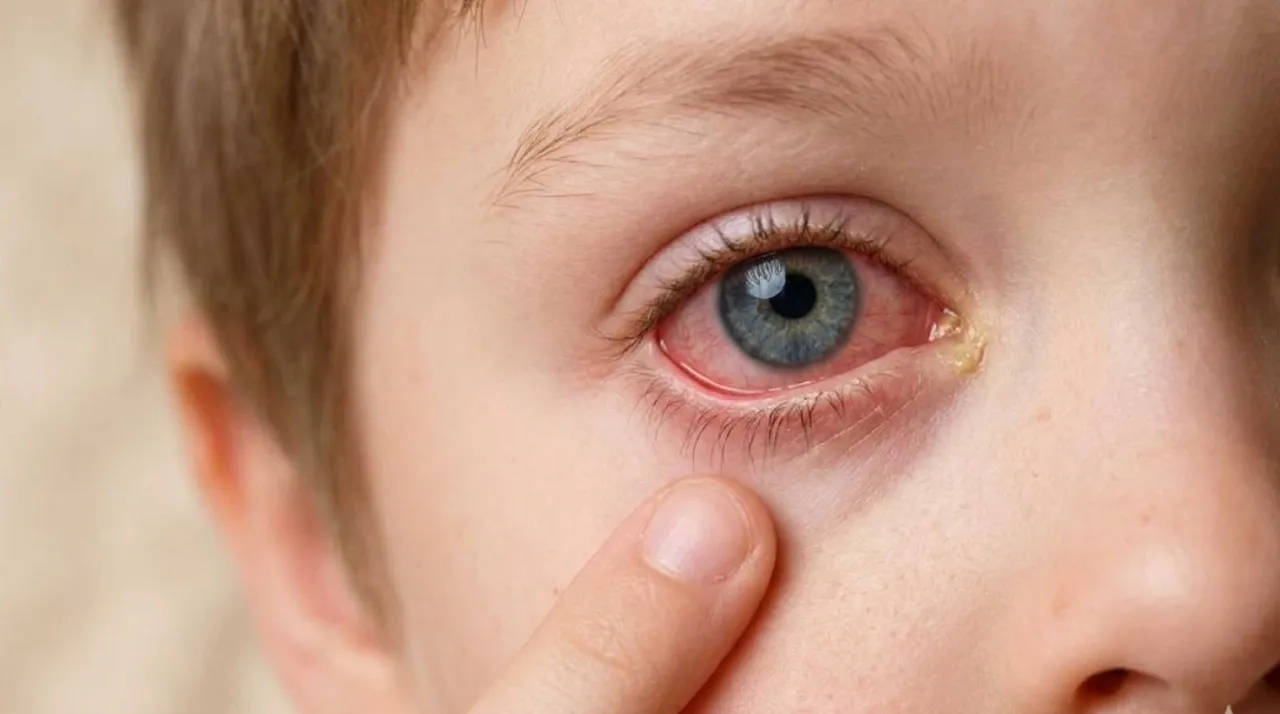
You notice your child rubbing one eye at breakfast. By lunchtime, it looks red, watery, and a little crusty. It is easy to assume the worst, but not every case of pink eye needs urgent care. In many children, symptoms are mild and improve with simple home care. In other cases, a same-day visit is the better choice.
This guide explains what pink eye means, the different types parents should know, pink eye treatment for kids at home, and the signs that tell you it is time to have your child evaluated.
What Pink Eye Means in Children
Pink eye can look dramatic, especially when redness and discharge appear suddenly, but understanding the basics can help parents respond calmly and confidently.
What Pink Eye Is
Pink eye, also called conjunctivitis, happens when the thin clear tissue over the white part of the eye and inside the eyelid becomes inflamed. That inflammation can make the eye look red or pink, feel irritated, and produce tears or discharge.
In children, pink eye can be caused by a virus, bacteria, allergies, or irritation from something in the environment. Viral pink eye is especially common and often shows up around the same time as cold symptoms like a runny nose or sore throat. That is one reason pink eye in kids is so common during school months.
Why Pink Eye Is So Common in Kids
Children touch their faces and eyes often, even when their hands are not clean. That makes it easier for germs to move from hands to eyes. Pink eye also spreads quickly in schools, daycares, sports teams, and busy households where kids share toys, towels, and surfaces.
Respiratory droplets, contaminated hands, and high-touch items can all play a role. If one child in a classroom has conjunctivitis in children, it is not unusual for several others to develop similar symptoms soon after. That is also why parents often ask, is pink eye contagious. The answer depends on the cause, but viral and bacterial pink eye can spread easily.
The Main Types of Pink Eye Parents Should Know
Not all pink eye is the same. The cause often shapes both the symptoms and the best next step.
Viral Pink Eye
Viral pink eye usually causes red, watery, irritated eyes. It may start in one eye and move to the other. Many kids also have cold-like symptoms at the same time, such as a cough, congestion, or sore throat.
This type often improves on its own over a week or two, though some cases may last longer. Because it is caused by a virus, antibiotics do not help. Comfort care is usually the main treatment.
Bacterial Pink Eye
Bacterial pink eye is more likely to cause thicker yellow or green discharge. Parents often notice that a child’s eyelids are stuck together in the morning. It may begin in one eye, though both eyes can become involved.
Some mild cases improve without antibiotics, but not always. Depending on your child’s age, symptoms, and eye exam, a clinician may prescribe antibiotic eye drops or ointment. This is why it is important not to assume that every red eye needs medication, but also not to ignore symptoms that are getting worse.
Allergic Pink Eye
Allergic pink eye usually affects both eyes and tends to cause itching, tearing, puffiness, and redness. Unlike viral or bacterial pink eye, it is not contagious.
It is often triggered by pollen, pet dander, dust, mold, or seasonal allergies. If your child’s eyes are itchy and watery but they otherwise seem well, allergic pink eye may be the reason.
Irritant-Related Pink Eye
Sometimes the eye becomes red because it was exposed to smoke, chlorine, perfume, cosmetics, or another irritant. Even a small foreign particle can lead to redness and tearing.
This matters because not all red eyes are infections. If symptoms started right after an exposure, irritant-related pink eye may be more likely. Still, if the eye remains painful, vision seems affected, or your child is very uncomfortable, they should be checked.
Pink Eye Treatment for Kids at Home
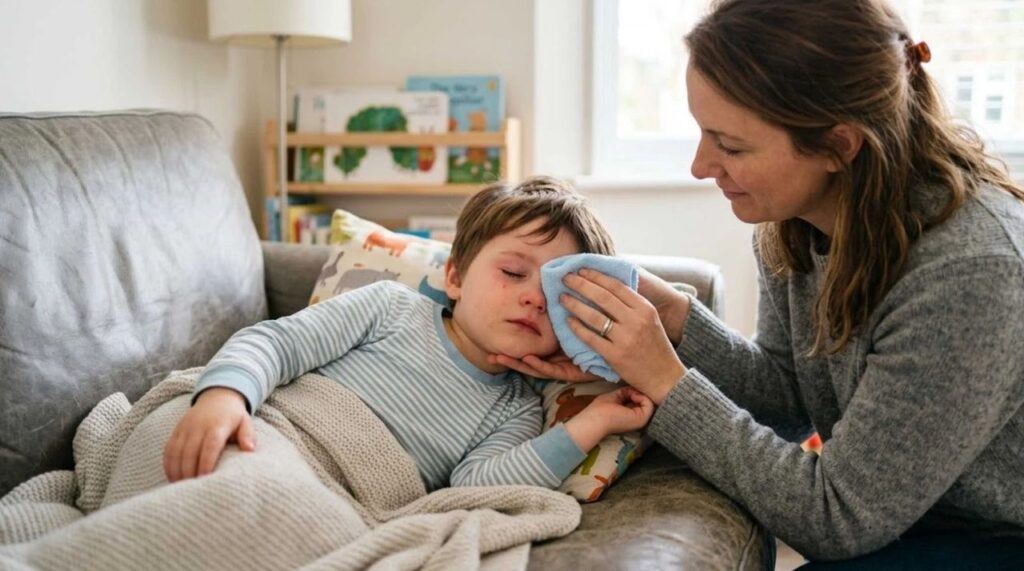
Many parents want to know what they can do right away. For mild cases, home care can go a long way in easing discomfort and preventing spread.
What Can Help Relieve Symptoms
Pink eye treatment for kids often starts with simple supportive care. A clean warm or cool compress placed gently over the closed eye can soothe irritation and loosen crusting. If discharge builds up on the lashes, you can gently wipe it away with a clean damp cloth.
Artificial tears may help some children feel more comfortable, especially if the eye feels gritty or dry. It is also important to encourage handwashing and remind kids not to rub their eyes, since rubbing can make irritation worse and spread germs to the other eye.
For many families, these basics are the most helpful part of home care for pink eye, especially in mild viral cases.
What Parents Should Not Do
There are a few common mistakes that can make pink eye harder to manage. Do not share towels, pillowcases, washcloths, or eye drops between family members. Do not let your child continue wearing contact lenses until a clinician says it is safe.
It is also smart not to assume antibiotics are always the answer. Viral pink eye does not improve with antibiotic drops, and unnecessary medicine can irritate the eye or create confusion about what is actually helping.
Parents should also avoid putting random home remedies into the eye. The eye is sensitive, and treatments not designed for ophthalmic use can cause more irritation.
When Antibiotics May Be Used
One of the biggest questions around eye drops for pink eye is whether antibiotics are necessary. The answer is not always. Antibiotics do not treat viral pink eye, which is one of the most common forms in children.
Some mild bacterial infections may improve without antibiotics, but there are times when prescription drops or ointment make sense, especially when discharge is significant, symptoms are persistent, or a clinician suspects a bacterial cause based on the exam. If you are wondering, do kids need antibiotics for pink eye, the safest answer is that it depends on the type of pink eye and how your child is doing.
Signs Your Child May Need Urgent Care for Pink Eye
This is the question most parents really want answered. While many cases are mild, some symptoms should not be watched at home for too long.
Urgent Symptoms Parents Should Not Ignore
Seek prompt medical care if your child has eye pain, light sensitivity, blurred vision that does not clear after wiping away discharge, or intense redness. These symptoms are not typical of simple mild pink eye and may point to a more serious problem.
You should also have your child seen if swelling is worsening, redness is spreading around the eye, or symptoms are getting worse instead of better. A red eye with severe discomfort deserves more than a wait-and-see approach.
Special Cases That Need Prompt Medical Evaluation
Some children should be evaluated sooner even if symptoms seem straightforward. Contact lens wearers need prompt care because red eyes in contact lens users can sometimes signal a more serious infection. Newborns and very young infants also need medical attention quickly when eye discharge or redness appears.
Children with weakened immune systems should not wait long to be evaluated. The same is true if you suspect a herpes-related eye infection or symptoms appear along with a chickenpox-like rash. These are not situations for home guessing.
When It Is Fine to Start With Home Care
If your child has mild redness, watering, and irritation without pain, vision changes, or worsening swelling, it is often reasonable to begin with home care. This is especially true if your child otherwise feels well and symptoms are stable or slowly improving.
The key is watching the pattern. Mild symptoms that improve over a day or two are very different from symptoms that intensify. If you are unsure, an urgent care evaluation can give you clarity and peace of mind without waiting too long.
How Doctors Diagnose and Treat Pink Eye
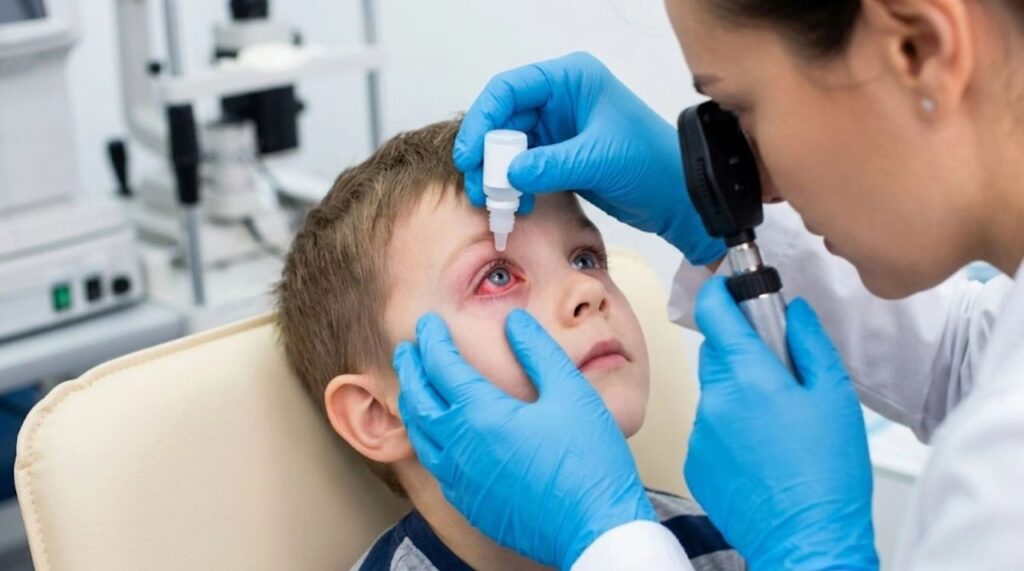
Knowing what happens at a visit can make the decision to seek care feel easier for parents.
How Pink Eye Is Diagnosed
Doctors usually diagnose pink eye by listening to the symptom history and examining the eye. They may ask whether your child recently had a cold, has allergy symptoms, was around someone with pink eye, or wears contact lenses.
In most cases, lab testing is not needed. The appearance of the eye, the type of discharge, and the overall symptom pattern often provide enough information to guide treatment.
What Treatment May Look Like
Treatment depends on the cause. Viral pink eye is usually managed with supportive care and time. Bacterial pink eye may be treated with antibiotic drops or ointment when appropriate. Allergic pink eye may improve with allergy-focused treatment and avoiding triggers.
If your child wears contact lenses, they will usually be told to stop wearing them until the eye has fully healed and a clinician says it is safe to restart.
Can Kids Go to School or Daycare With Pink Eye
This is one of the most practical concerns for families, especially when symptoms begin on a school morning.
When Kids Should Stay Home
Children should stay home if symptoms are active enough to make them uncomfortable, if the eye drainage is difficult to manage, or if the school or daycare has a policy that requires temporary exclusion. A child should also stay home if a clinician recommends it.
Parents sometimes feel pressure to get antibiotic drops quickly just for return-to-school reasons, but the better approach is to focus on the actual cause and your child’s comfort.
What Parents Should Know About Return Timing
Allergic pink eye is not contagious, so school exclusion may not be necessary. Viral pink eye can spread while symptoms are present, and bacterial pink eye may also be contagious.
School and daycare rules vary, but pediatric guidance generally does not recommend excluding otherwise well children only because of pink eye. Follow your school’s policy and your clinician’s advice. That is why it is best to check with your child’s school and follow clinical advice based on the likely cause.
How to Prevent Pink Eye From Spreading at Home
Preventing spread is one of the most helpful things families can do once symptoms start.
Daily Prevention Steps That Matter
Encourage frequent handwashing with soap and water. Remind your child not to touch or rub their eyes. Do not share towels, washcloths, pillowcases, makeup, or eye products.
Clean commonly touched surfaces such as doorknobs, light switches, tablets, and bathroom counters. If your child uses contact lenses, follow guidance about replacing or cleaning lenses and cases before using them again. These simple habits can reduce the chance that one red eye turns into a whole-household problem.
When to Stop Guessing and Get Your Child Checked
Parents do not need to panic over every red eye, but they also should not feel like they have to sort it out alone.
Final Takeaway for Parents
Many cases of pink eye are mild and can be managed with comfort care, good hygiene, and close observation. Not every child with conjunctivitis needs urgent care, and not every case needs antibiotics.
Still, same-day evaluation matters when there is pain, light sensitivity, blurred vision, worsening swelling, severe redness, contact lens use, or symptoms that are not improving. When the cause is unclear or your child seems more uncomfortable than expected, getting checked is the safest next step. A timely pediatric evaluation can help you know exactly what kind of pink eye your child has and what treatment will help most.
Frequently Asked Questions
Parents usually have a few repeat questions about pink eye, especially when symptoms first appear.
How Do I Know If My Child’s Pink Eye Is Viral or Bacterial
Watery eyes with cold symptoms often suggest viral pink eye. Thicker yellow or green discharge and eyelids stuck shut in the morning may point more toward bacterial pink eye. Even so, symptoms can overlap, so a clinician may be needed to tell for sure.
Does Pink Eye Always Need Antibiotics
No. Viral pink eye does not improve with antibiotics, and some mild bacterial cases can get better without them. Antibiotics are used when a clinician believes they are likely to help.
Can My Child Go to School With Pink Eye
It depends on the cause, the severity of symptoms, and the school or daycare policy. Allergic pink eye is not contagious, while viral and bacterial pink eye may spread to others.
When Should I Take My Child to Urgent Care for Pink Eye
Take your child to urgent care if they have eye pain, light sensitivity, blurred vision, severe redness, worsening swelling, contact lens use, or symptoms that are not getting better. Those signs deserve prompt medical evaluation.
Get Your Child’s Eyes Checked Today
If your child has red, irritated, or crusty eyes and you are not sure what to do next, you do not have to figure it out alone. Our pediatric team is here to help.
We provide fast, same-day care for pink eye and other common childhood illnesses. Walk in or call ahead to check wait times.
290 W Loop Road, Wheaton, IL 60189
630-868-3621
Open daily from 9 AM to 9 PM