Kids are active. They run, climb, fall, and explore the world without much concern for sharp edges or hard ground. Because of that, cuts and scrapes are one of the most common reasons parents seek medical care for their children. Many minor injuries can be handled at home, but some wounds need medical attention to heal properly and safely.
Knowing when home care is enough and when it is time to see a pediatrician can help prevent infection, scarring, and unnecessary stress for both parents and children.
Why Cuts and Scrapes Are So Common in Children
From playground falls to sports injuries and everyday accidents at home, children are constantly on the move. Their skin is more delicate than adult skin, and they may not always react quickly enough to protect themselves during a fall or impact.
Common causes of cuts and scrapes include:
- Falling on pavement or concrete
- Sports injuries
- Bicycle or scooter accidents
- Contact with sharp objects
- Accidental cuts during play
- Pet scratches or bites
While many of these injuries look minor at first, some can be deeper than they appear.
When Home Care May Be Enough
Small, superficial cuts and scrapes often heal well with basic care at home. These are typically injuries that:
- Are shallow
- Stop bleeding quickly
- Have clean edges
- Do not gape open
- Do not involve the face, hands, or joints
Even when an injury seems mild, parents should continue to monitor the area over the next few days. Changes in redness, swelling, pain that worsens, or drainage may be signs that medical care is needed.
Signs a Cut or Scrape Needs Medical Attention
Some wounds should be evaluated by a pediatrician as soon as possible. Home care may not be enough if you notice any of the following:
- Bleeding that does not stop
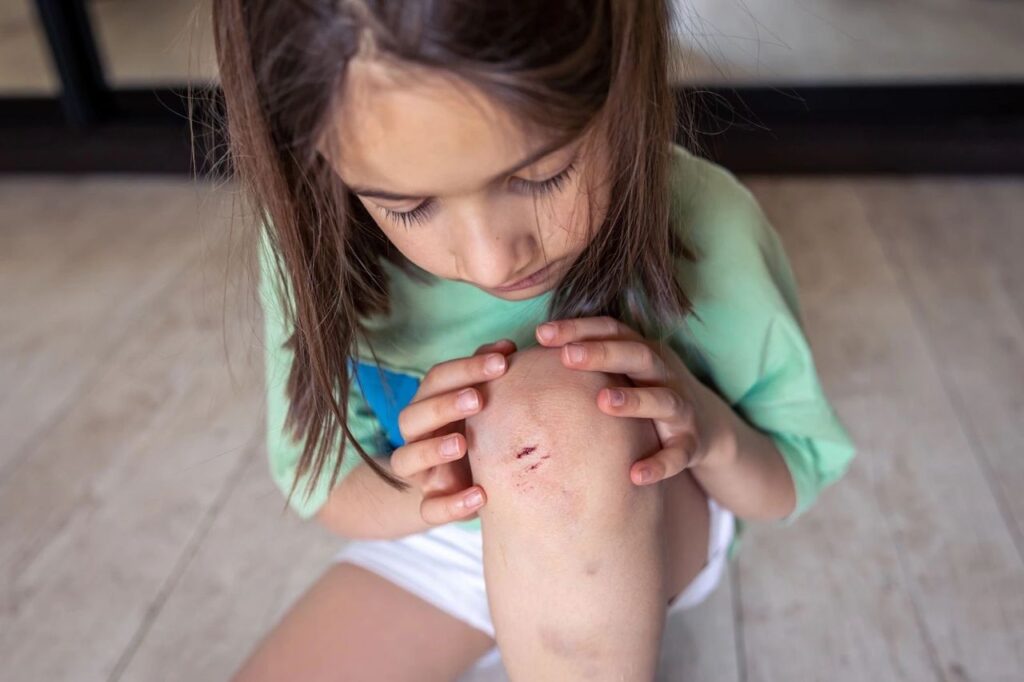
- Deep or wide cuts
- Wounds with jagged edges
- Cuts where the skin is pulled apart
- Visible tissue beneath the skin
- Injuries caused by dirty objects or puncture wounds
- Animal or human bites
- Cuts to the face, lips, eyelids, or ears
- Injuries near joints or tendons
- Increasing pain or swelling
- Signs of infection such as redness, warmth, pus, red streaks, or fever
For wounds caused by dirty objects or punctures, the clinician may also review your child’s tetanus vaccine status.
If you are unsure, it is always safer to have a pediatrician examine the wound.
Why Some Cuts Need Stitches
Stitches are not only used to close wounds. They also help wounds heal properly and reduce the risk of complications. When a cut is deep or wide, the skin may not close on its own. Leaving it open may increase the risk of infection, poor healing, or noticeable scarring.
Stitches may be needed to:
- Close the wound properly
- Control bleeding
- Reduce scarring
- Protect deeper tissues
- Help the skin heal evenly
In some cases, medical glue or adhesive strips may be used instead of stitches, depending on the location and depth of the injury. A pediatrician can determine the best option.
Timing Matters With Wound Closure
Closure timing matters. Many clean cuts can still be closed hours after an injury, but the best approach depends on how clean the wound is, where it is on the body, and your child’s individual risk factors. Waiting too long can increase the risk of infection or make proper closure more difficult.
If you think your child’s cut might need stitches, glue, or strips, it is best to have them seen the same day. Pediatric urgent care is often a faster and more comfortable option than an emergency room for these types of injuries.
Why Pediatric Care Is Important for Wounds
Children are not just small adults. Their bodies heal differently, and their emotional needs are unique. Pediatric urgent care providers are trained to evaluate and treat injuries in a way that is safe and less stressful for kids.
Benefits of pediatric urgent care for cuts and scrapes include:
- A child-friendly environment
- Experience with pediatric wounds
- On-site supplies for wound care
- Gentle techniques to reduce fear
- Shorter wait times than the emergency room
Parents often find that children feel calmer and more comfortable in a setting designed specifically for them.
Preventing Infection and Complications
Even small wounds can become infected if not properly evaluated and monitored. Infection can slow healing and may lead to more serious problems if left untreated.
Signs of infection to watch for include:
- Increasing redness around the wound
- Swelling or warmth
- Pain that worsens over time
- Drainage or pus
- Fever
- Red streaks near the injury
If you notice any of these signs, your child should be seen by a medical professional promptly.
Scarring and Cosmetic Concerns
Parents often worry about scarring, especially when a cut is on the face or another visible area. Proper wound evaluation and closure can help reduce long-term scarring.
Pediatric urgent care providers consider:
- Location of the wound
- Direction of the cut
- Tension on the skin
- The best closure method for healing
Early care can make a difference in how a wound heals and how noticeable a scar may be later on.
Emotional Comfort Matters Too
Cuts and scrapes can be frightening for children, even when the injury is not severe. Pain, blood, and unfamiliar settings can increase anxiety.
Pediatric urgent care centers focus on:
- Explaining procedures in kid-friendly language
- Using calming techniques
- Helping children feel safe
- Supporting parents through the visit
A calm experience can make a big difference in how a child handles future medical visits.
When to Choose Urgent Care vs the ER
For most minor to moderate cuts and scrapes, pediatric urgent care is the right place to go. However, some injuries require emergency care.
Go to the emergency room or call 911 if your child has:
- Heavy, uncontrolled bleeding
- A deep wound exposing muscle, tendon, or bone
- A severe injury from a major accident
- Trouble breathing or loss of consciousness
- A cut to the eye or eyelid with vision concerns
- An object stuck in the wound
- A partially amputated fingertip or deep hand injury
- A wound to the neck or chest with breathing difficulty
For everything else, pediatric urgent care offers quick, expert care without the long wait.
Trust Your Instincts as a Parent
Parents know their children best. If a cut looks worse than you expected, if your child is in significant pain, or if something just does not seem right, trust your instincts and seek medical care.
It is always better to have a wound checked and be reassured than to wait and risk complications.
How KIDS Urgent Care Can Help
KIDS Urgent Care provides same-day care for cuts, scrapes, and minor injuries for children from newborn through age 22. Our board-certified pediatricians can evaluate wounds, provide appropriate closure when needed, and help ensure proper healing.
We offer:
- Pediatric-focused urgent care
- On-site treatment for minor injuries
- A calm, child-friendly environment
- Faster care than the emergency room
We are open daily from 9:00 AM to 9:00 PM and accept walk-ins.
Final Thoughts for Parents
Cuts and scrapes are a normal part of childhood, but not every injury should be treated at home. Knowing when home care is not enough can protect your child’s health and help them heal safely.
If you are unsure whether a cut needs medical attention, it is always okay to have it checked by a pediatrician. Early care can help prevent infection, reduce scarring, and give parents peace of mind.
If your child has a cut or scrape that concerns you, come see a pediatrician today. We are here to help when your child needs care right away.